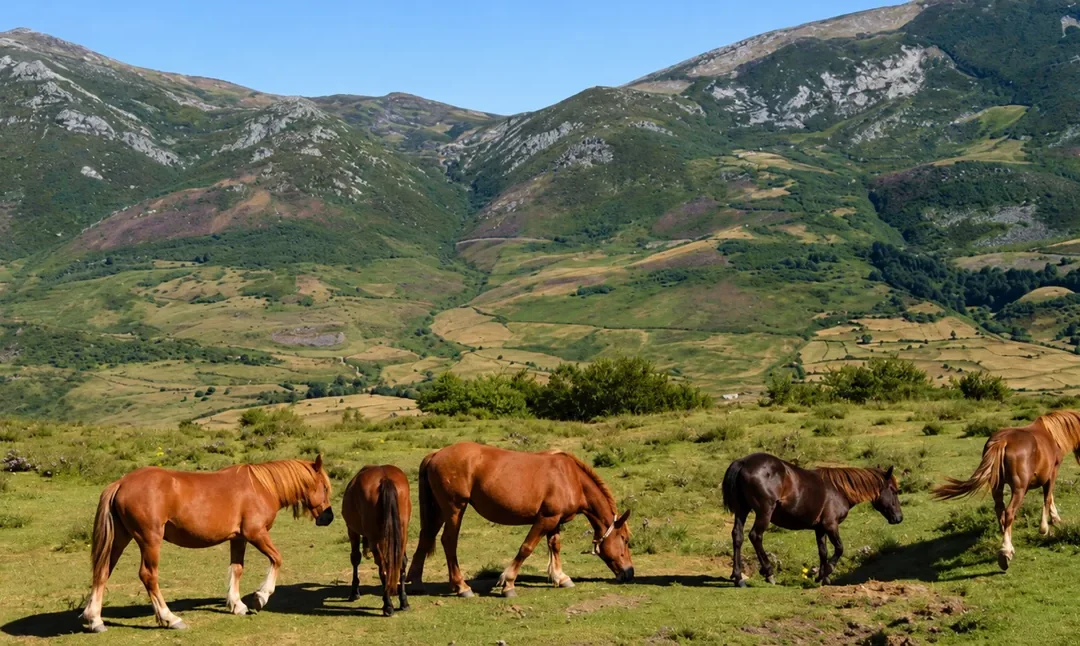
A journey around Reinosa reveals horses and mares grazing among meadows and hillsides. They are part of a landscape shaped over generations by livestock farming, mountain pastures and the fairs that brought farmers and buyers together in Reinosa.
Around the Ebro reservoir, especially along the northern shore towards Corconte, many horses can often be seen grazing. The road offers a chance to enjoy one of Campoo’s loveliest landscapes.
For another perspective on the landscape, horse-riding routes through the Campoo valley are organised from Abiada.
A land of pastures and livestock
Beyond Reinosa, the valleys of Campoo tell a story of meadows, pasture and livestock. For generations, families combined small crops with animal husbandry, using both their own land and communal pastures.
At the heart of his study of Campoo’s traditional land use, geographer Basilio Calderón describes the importance of livestock farming and shared pastures. Horses, mares and mules lived alongside other animals in a rural world shaped by the seasons and mountain resources.
Horses and mules at work
Before machinery arrived, horses and mules helped with farm work and transport. Breeding them also provided an income for many families.
Historian Jesús Gutiérrez Flores notes that places such as Campoo de Suso, Campoo de Yuso and San Miguel de Aguayo had many horses and mules, valued for work by buyers from Castile, La Mancha and beyond. Read his research in Rural life in Campoo in a subsistence economy.
Horses remain part of the landscape of Campoo, although their role has changed over time. Their presence recalls the region’s long livestock-farming tradition.
Reinosa: a town of fairs and markets
While animals were bred in the villages and pastures, Reinosa was a meeting place for those who came to buy and sell them. In Fairs in the Merindad of Campoo, Ramón Rodríguez Cantón draws on accounts of markets held in Reinosa in the 14th and 15th centuries and highlights the later importance of the San Mateo fair for livestock trading.
Animals arrived at the market from different places and found buyers beyond the region. Behind Reinosa’s relationship with horses lay a network of farmers, villages and roads.
Why are horses still seen in Campoo?
Over time, machinery took the place of animals in many farming tasks. Horses are still bred in the region, though their uses have changed.
One breed found in Cantabria’s mountain areas is the Hispano-Breton. According to MANADAS, Cantabria’s breeders’ association, it was first used for work and later also bred for meat. Not all horses seen in Campoo belong to this breed; seeing an animal from the road is not enough to identify it.
Are horses grazing in the hills wild?
Although they graze freely in open spaces, many of these horses belong to farmers who care for them. Seeing them on the hills does not necessarily mean they are wild.
If you encounter animals on a walk, watch them from a respectful distance, avoid feeding them or approaching foals, and keep your dog under control.
Discover Campoo on horseback: rides from Abiada
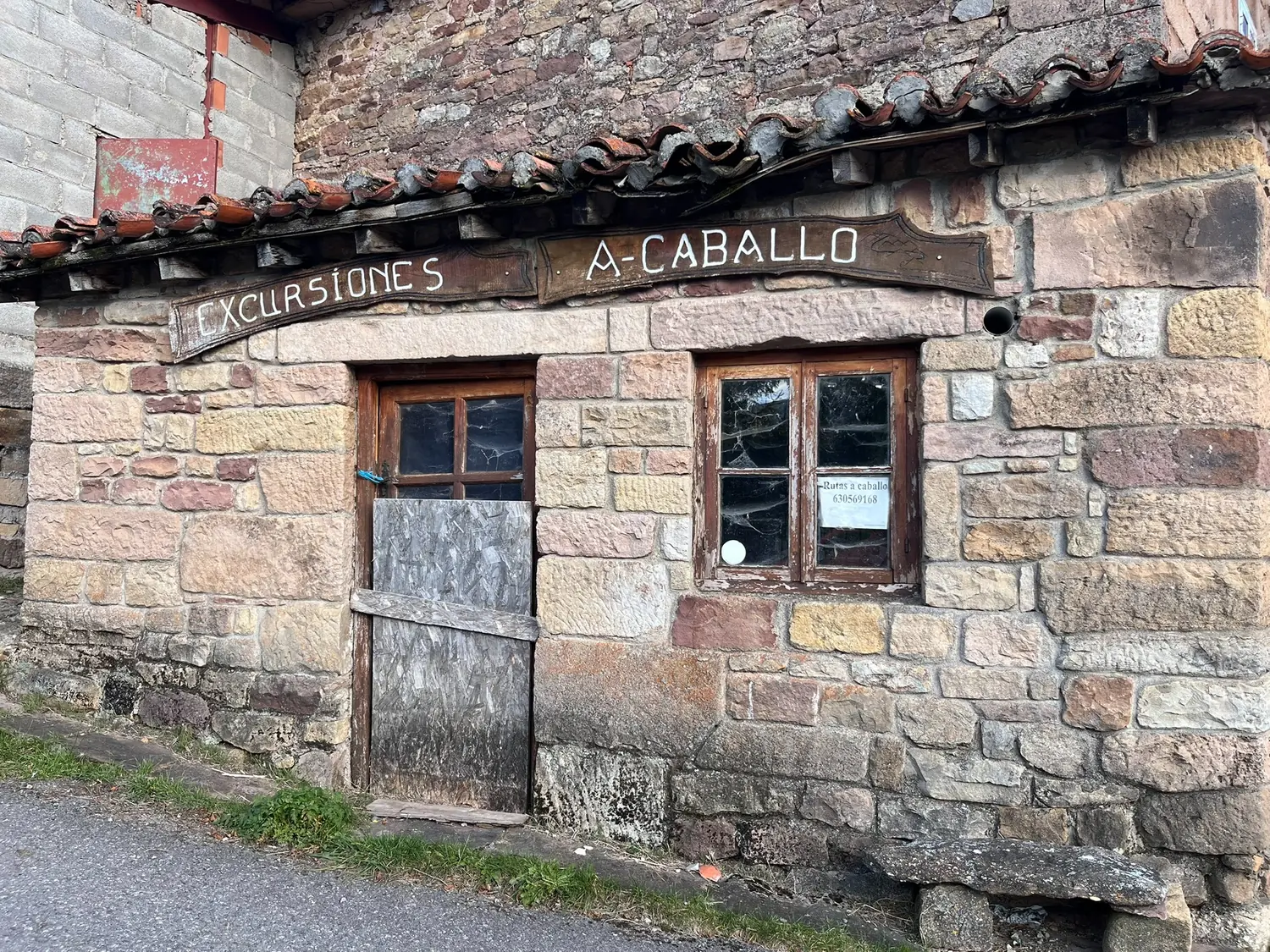
Horse-riding excursions in Abiada.
There is another way to enjoy Campoo’s landscape: explore it on horseback. In Abiada, Turismo Ecuestre Abiada organises rides through the Campoo valley.
It is a different way to discover the local paths and countryside. Before planning your visit, check the available routes, conditions and prices with the company.
Next to the riding centre is La Cotera restaurant, an option for a meal and a chance to discover the food of Campoo. Check its opening hours and availability directly.
A way to read the landscape
The horses seen near Reinosa are part of a landscape cared for and worked over generations. Behind each meadow lie village life, local farming knowledge and a long connection with the mountains.
When horses appear across a meadow, it is worth pausing to watch them: they offer a beautiful way to connect with Campoo’s history and landscape.
Continue exploring Campoo
Explore our walks and nature in Campoo.
Discover also the history of Reinosa and Campoo.
Sources and references
Basilio Calderón Calderón. La organización tradicional del espacio en Campoo: economía y sociedad en un valle de montaña de la Cordillera Cantábrica. 1996. Repositorio de la Universidad de Valladolid.
Jesús Gutiérrez Flores. Las formas de vida en Campoo en una economía rural de subsistencia (1850-1950). Vacarizu.
Ramón Rodríguez Cantón. Fairs in the Merindad of Campoo. Vacarizu.
MANADAS. La raza equina hispano-bretona.
Turismo Ecuestre Abiada. Información sobre rutas a caballo. Consulta: 22 de noviembre de 2026.