A few kilometres from Reinosa, a stone church invites you to slow down. The collegiate church of San Pedro brings together Romanesque architecture, medieval inscriptions and some of Campoo’s most distinctive sculpture. Walk around it, look up and take in the details left in its walls over the centuries.
From monastery to collegiate church
The story of San Pedro reaches back to the medieval monastic world. Campoo de Enmedio’s town council notes a reference to the monastery attributed to the year 999, but considers the document in which it appears to be apocryphal. The date should therefore be treated with caution: on its own, it cannot establish the origins of the building we see today.
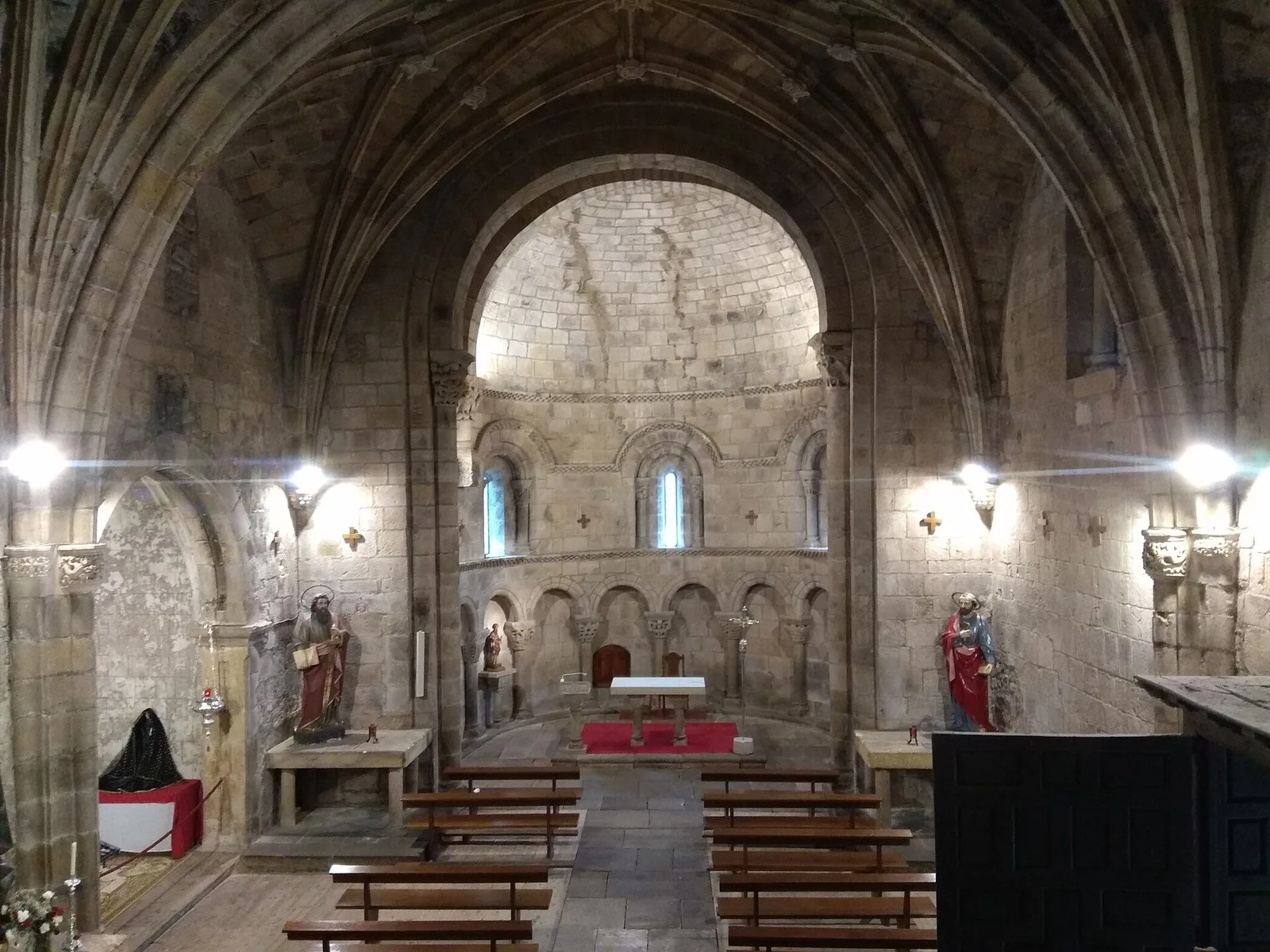
The present church is predominantly twelfth-century Romanesque. Two inscriptions on the façade have been associated with the dates 1129 and 1199 and with different stages of construction. The tower, added to the nave later, helps give the building its distinctive outline.
The doorway and its carved stone
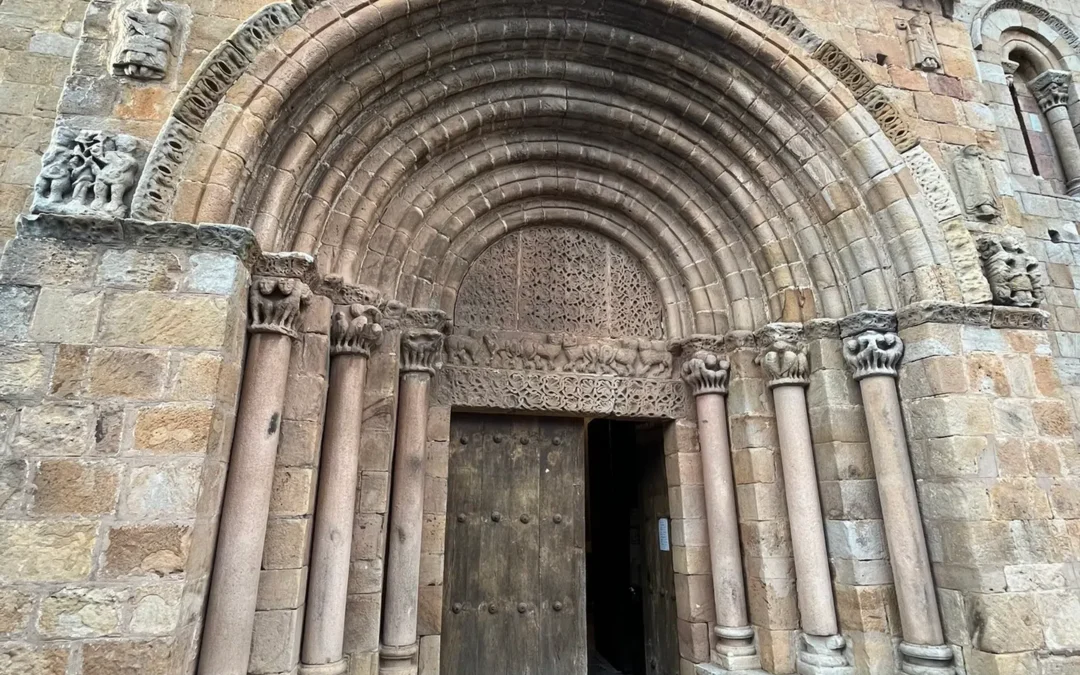
Begin at the doorway. Its arches and capitals show how Romanesque builders treated an entrance as a richly decorated space, bringing architecture and sculpture together. Look closely at the reliefs to appreciate the skill of the stonemasons and the variety of forms they carved.
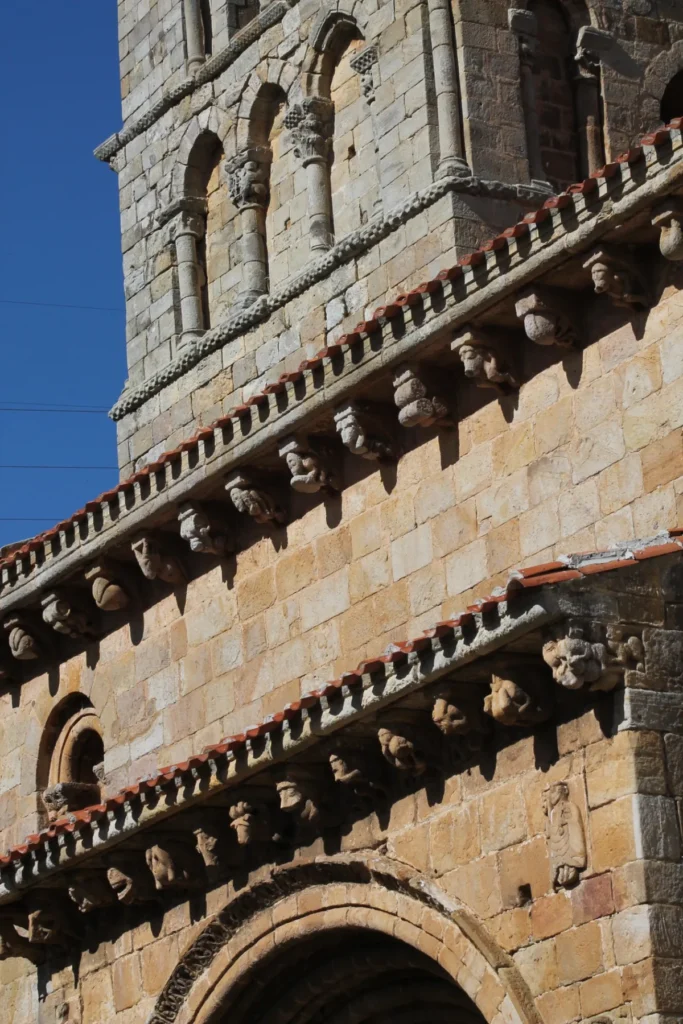
Then walk around the building and look beneath the eaves. Here you will find the corbels, small projecting stones that appear to support the cornice. At Cervatos they form a particularly expressive collection of human and animal figures, including scenes of a sexual nature.
What do the carvings mean?
The scenes have inspired curiosity and many interpretations. Some readings see them as moral warnings, but the precise meaning of each figure cannot always be established with certainty. Rather than reducing them to a single explanation, it is rewarding to consider their medieval context and the questions that remain open.
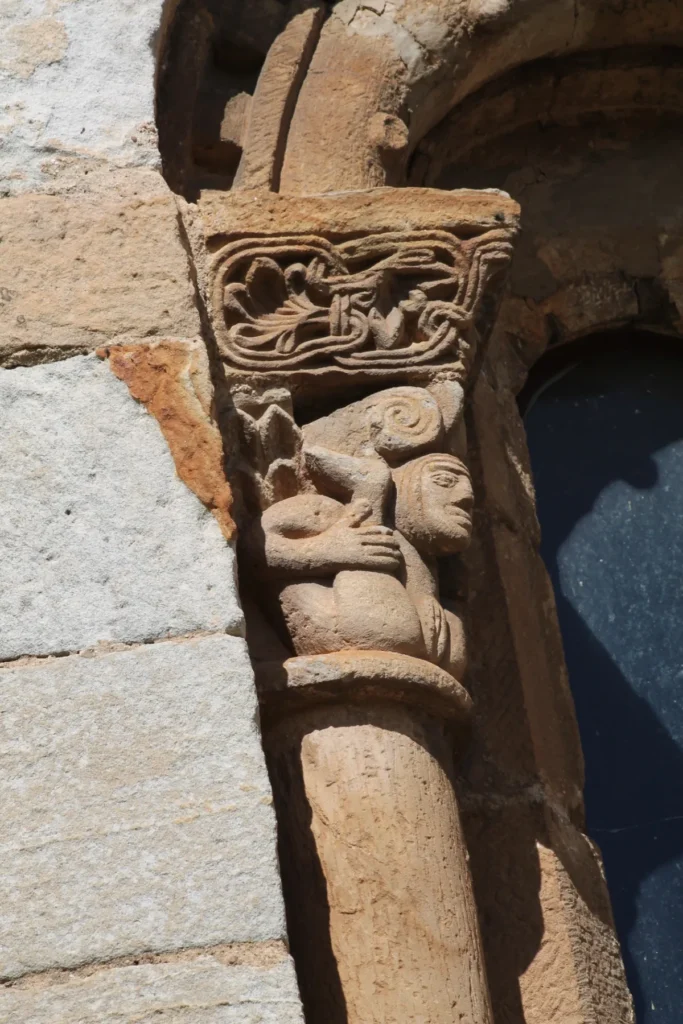
The church also rewards attention to less obvious details: the relationship between sculpture and architecture, the differences between figures, and the way changing light brings their relief to life. A small pair of binoculars can help you see the carvings from the ground while respecting the monument and its surroundings.
A cultural day trip from Reinosa
Cervatos lies in Campoo de Enmedio and pairs well with a visit to Julióbriga and Retortillo. Together, the Roman site and its reconstructed house and the medieval art of the collegiate church offer a journey between eras.
Before setting out, check whether the church interior is open and the conditions for visiting. Opening times can vary, and seeing the exterior does not guarantee access inside. Wear comfortable shoes and plan around the weather.
The history of Campoo · Villages and places to visit · Travel journal · Discover El Reino y la Osa
Sources and further reading
External links open in a new tab.