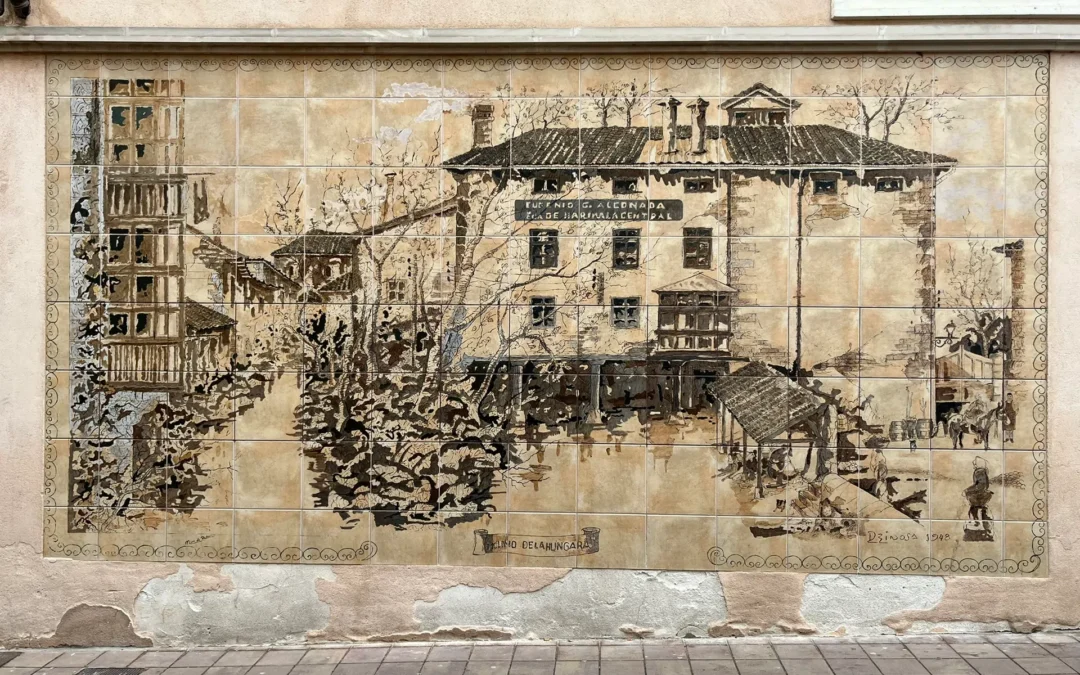
Opposite El Reino y la Osa, the name La Húngara recalls an industry that helped shape Reinosa and Campoo: flour milling. Today the car park is a familiar landmark for visitors to the centre, but its name also opens a window onto a region of rivers, mills and trading routes.
One river, fourteen flour mills
Water has shaped Campoo’s landscape and provided a source of power. Before modern industry, mills harnessed the current to grind grain. During the nineteenth century, some of that tradition evolved into new factories serving an economy that linked the Castilian plateau with Santander.
A collection published by the Sánchez Díaz Public Library records that, in the early twentieth century, there were fourteen flour factories between the source of the Ebro and Reinosa. That number evokes a very different stretch of river from the one visitors see today: not just a place for walking, but also for work and production.
La Central, known as La Húngara
Among them was La Central, associated with businessman Felipe Ruiz de Huidobro and known in Reinosa as La Húngara. The library’s account describes it as one of the area’s most modern mills, producing 90 sacks a day. The factory has disappeared, but its name remains part of the town’s everyday geography.
The library suggests that the name may refer to the Austro-Hungarian milling system, in which grain passed through the machinery several times to produce fine, even flour. This is a possible explanation recorded by the source, rather than a certain origin.
From watermills to industry
The story of the flour mills is also one of changing ownership and trade. The same publication records that, in the mid-nineteenth century, some older mills changed hands and gave way to factories such as Ciella, San Esteban and La Central. Each name represents investment, skilled work and commercial ties between Reinosa and the surrounding villages.
Not all of those buildings survive or can be visited: some have disappeared or found new uses. Their story offers another way to read the landscape and a reminder that industry in Campoo predates its large twentieth-century factories.
A walk that reveals another side of Reinosa
From La Húngara, walk down to the Ebro and the Carlos III Bridge, then continue through the town centre, imagining the routes once travelled by people and goods. It is a simple way to connect the story of the river with that of the town. If you have more time, continue to Fontibre, where the Ebro emerges and begins its visible course.
Following the flour trail
The story of Campoo’s flour mills continues further down the valley. In Pesquera, the Caminos de la Harina Visitor Centre preserves original machinery from the former La Montañesa.
Discover how Castilian wheat, the power of water and the routes towards Santander helped transform the Besaya valley.
Sources and references
To explore the history of flour milling in Reinosa and Campoo, these are the documentary sources we consulted:
- Sánchez Díaz Public Library (Reinosa). ¿Sabías que Reinosa? (PDF). A documentary compilation on the area’s flour mills and factories.
- Martínez Ruiz, Encarnación-Niceas. «Reinosa hace 100 años», Cuadernos de Campoo, no. 1. Historical context for Reinosa’s economic and industrial activity.