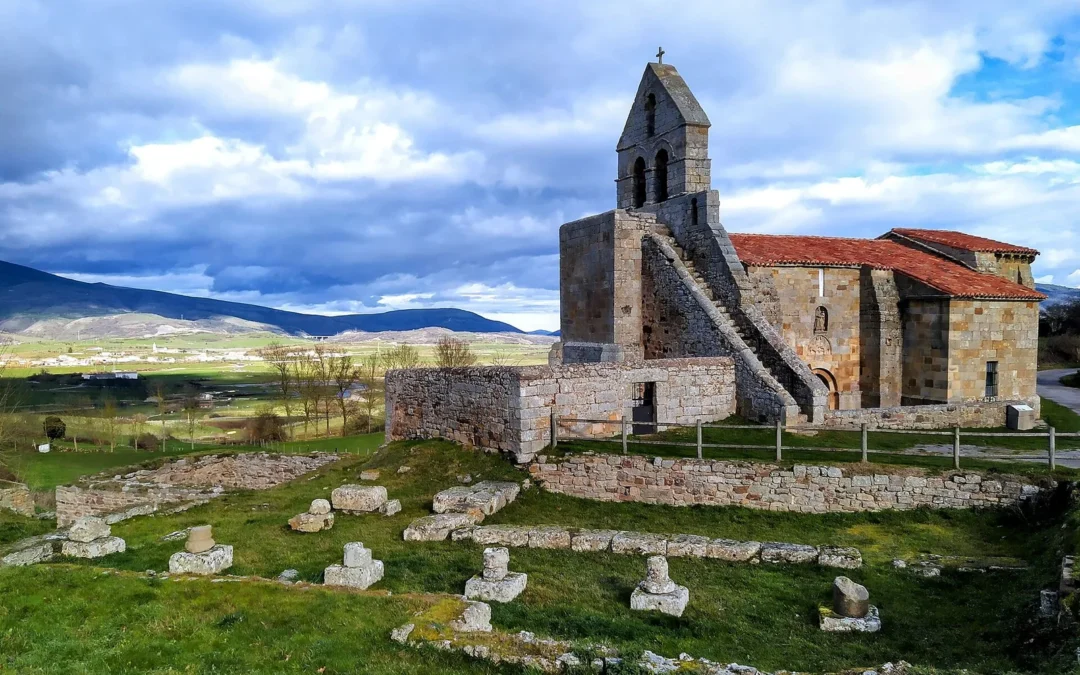
On a hill in Retortillo, a few kilometres from Reinosa, the remains of a Roman town sit beside a Romanesque church overlooking the Ebro reservoir. Traditionally identified as Julióbriga, the archaeological site brings several eras together in one landscape: antiquity underfoot, the Middle Ages in the church’s stonework, and the much more recent reservoir on the horizon. Julióbriga, permite leer varias épocas en un mismo paisaje: la Antigüedad bajo los pies, la Edad Media en la piedra de la iglesia y el embalse, mucho más reciente, en el horizonte.
A Roman town in the land of the ancient Cantabrians
Retortillo has traditionally been identified with Julióbriga. Research published in the Boletín de la Real Academia de la Historia proposes an alternative location at Camesa-Rebolledo; you can read the full study at the end of this page.
The town was founded in the time of Augustus, during the Roman conquest of northern Iberia. Its name, linked to Julius Caesar, recalls the new political and cultural power established in the region. According to the site’s visitor centre, Julióbriga reached its greatest development in the first and second centuries AD.
Its position helps explain the importance of routes through Campoo. This area connected the inland territories with the Cantabrian coast; the town was a place of daily life, administration and exchange in a landscape that now invites a leisurely visit.
What to see at the archaeological site
Outside, you can make out the remains of streets, houses and public spaces. Do not expect a fully reconstructed town: excavations have uncovered only part of the site. The information panels help bring it to life as you follow the walls, foundations and outlines of an ancient settlement.
Among the areas uncovered are the forum and the remains of houses of different sizes. Their differences offer a glimpse of the town’s social diversity: families did not all have the same space or lead the same lives.
The Domus: stepping inside a Roman house
To imagine how these spaces were used, visit the Domus of Julióbriga, a reconstruction inspired by the Casa de los Morillos excavated at the site. Its domestic rooms and archaeological objects offer an insight into Roman homes and daily life. Domus de Julióbriga, una recreación inspirada en la llamada Casa de los Morillos, excavada en el propio yacimiento. El centro presenta ambientes domésticos y objetos arqueológicos que ayudan a entender la vivienda y la vida cotidiana romana.
Visits inside the Domus are guided and, according to the official information, last around 45 minutes. You can explore the outdoor remains independently. Tour times, capacity and conditions can change, so check the official opening and ticket information before travelling. información oficial de horarios y entradas antes de desplazarte.
Santa María de Retortillo: another era above the Roman town
Beside the remains stands the church of Santa María de Retortillo. The Romanesque building occupies part of the ancient town, a reminder that people continued to live in and reshape this landscape long after Roman times. Notice the contrast between the church and the archaeological remains around it.
The reservoir visible from here belongs to a different, modern chapter. The view brings Campoo’s layers of history together: the Roman site, the medieval church and the landscape transformed by the dam.
Planning your visit from Reinosa
Retortillo is close to Reinosa and makes a relaxed outing. Allow time for the outdoor site and check tour availability if you would like to see inside the Domus. Wear comfortable shoes and plan around the weather, which can affect the centre’s opening hours.
You could round off the day at the Romanesque collegiate church of Cervatos or with a walk around the Ebro reservoir. Check opening times and access before you leave, particularly outside the main season. la colegiata románica de Cervatos o con un recorrido por el entorno del embalse del Ebro. Es preferible confirmar las aperturas y accesos antes de salir, especialmente fuera de temporada.
The history of Campoo · Villages and places to visit in Campoo · Discover El Reino y la Osa · More stories from the journal
Sources and visitor information
Further reading: the traditional identification of Julióbriga with Retortillo has an alternative hypothesis. In the Boletín de la Real Academia de la Historia, Pedro Ángel Fernández Vega, Lino Mantecón Callejo and Rafael Bolado del Castillo propose Camesa-Rebolledo, in Valdeolea. This remains a subject of research and debate; the archaeological site and Domus at Retortillo remain open to visitors.
External links open in a new tab.
- Julióbriga y la Domus · Centros Culturales de Cantabria.
- Condiciones de la visita · Centro oficial.
- Zona arqueológica de Julióbriga · BOE.
Photograph: Emilio Gómez Fernández / Wikimedia Commons · CC BY-SA 4.0. Image resized and converted to WebP.